Agency vs No-Code vs AI App Builder: Cost, Timeline, and What You Get
Three ways to get an app built for your business: hire an agency, assemble it in a no-code tool, or describe it to an AI app builder. A plain-English comparison of cost, speed, and ownership.
· 6 min read
Key takeaways
- An agency can build exactly what you want, but it costs the most, takes the longest, and every change means another quote.
- No-code tools like Bubble or Glide are cheaper, but you have to learn how to assemble apps, and moving off the platform is hard.
- AI app builders turn a written description into a working result in minutes, though how much of the operating side they handle varies a lot.
- fingr covers planning, design, build, hosting, an admin dashboard, and security checks in one flow, and you can build one app with free credits.
- Use an AI builder to validate an idea. Bring in an agency or in-house team once it's proven and needs to scale.
The three options
If you run a business and need an app, you're usually choosing among three paths.
Hire an agency or freelancer. You write up requirements, get a quote, and go through design, development, testing, and launch.
Build it with no-code. Tools like Bubble, Glide, or Softr let you drag in screen blocks and configure data and logic yourself.
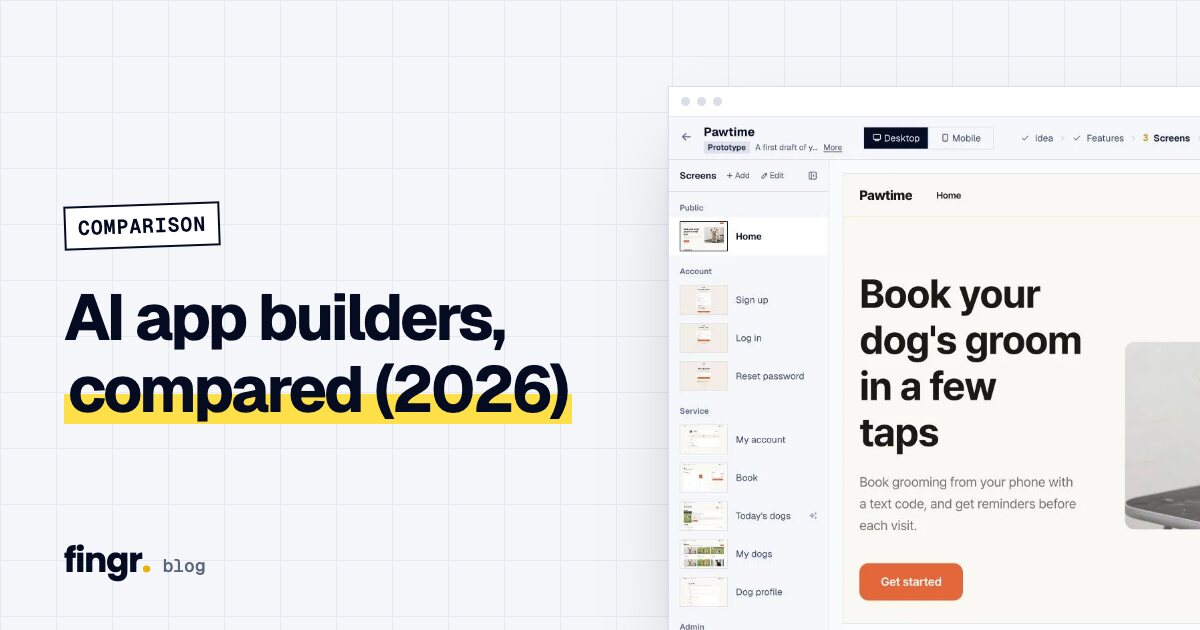
Use an AI app builder. With tools like fingr or Lovable, you describe the app in plain words and the AI builds screens and features.
What it costs
Agencies vary enormously by scope and location. Simple web apps are often quoted in the low tens of thousands of dollars, and once you add accounts, payments, an admin dashboard, and notifications, quotes frequently climb well past that. Hosting and maintenance are extra, and depending on your contract, even "can you move this button?" can be a billable change.
No-code means a monthly subscription, often with higher tiers as users or data grow. The bigger cost is your time learning the tool: data structures, visibility rules, and workflows are all yours to configure.
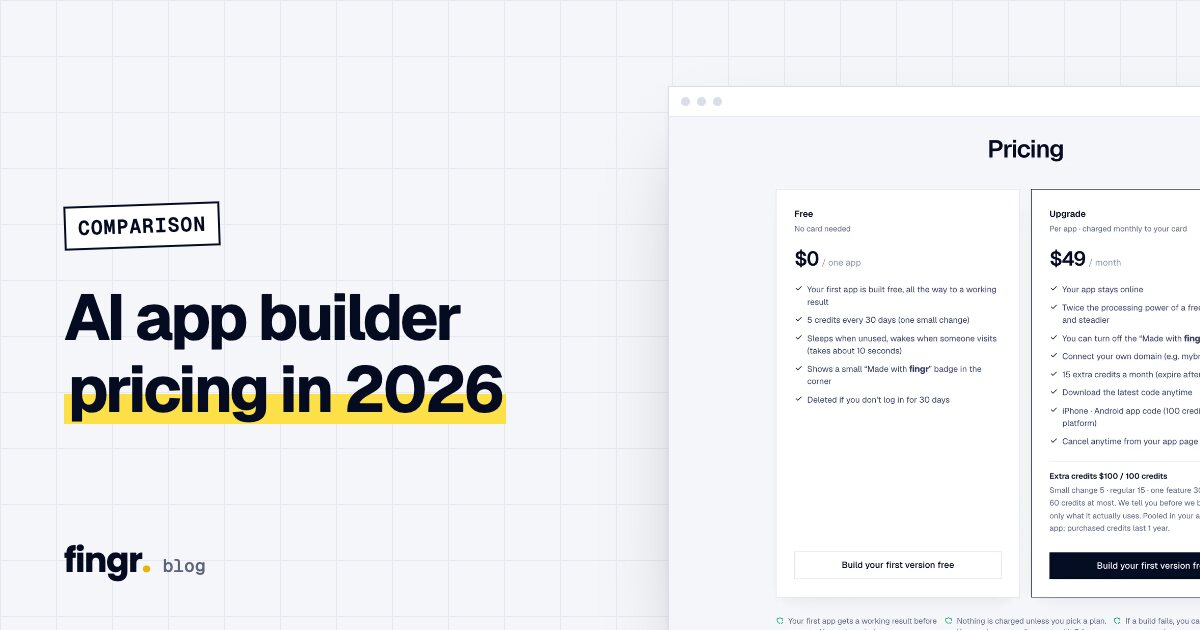
AI app builders usually charge a monthly plan plus credits. Per the official pricing pages on October 21, 2026, entry paid plans start at tens of dollars a month: Lovable Pro is $25, Replit Core $20, and v0 Plus $30 per user. If the tool only generates screens, you'll also pay separately for the database, login, and hosting services you connect. For every tool's pricing in one table, see AI app builder pricing compared.
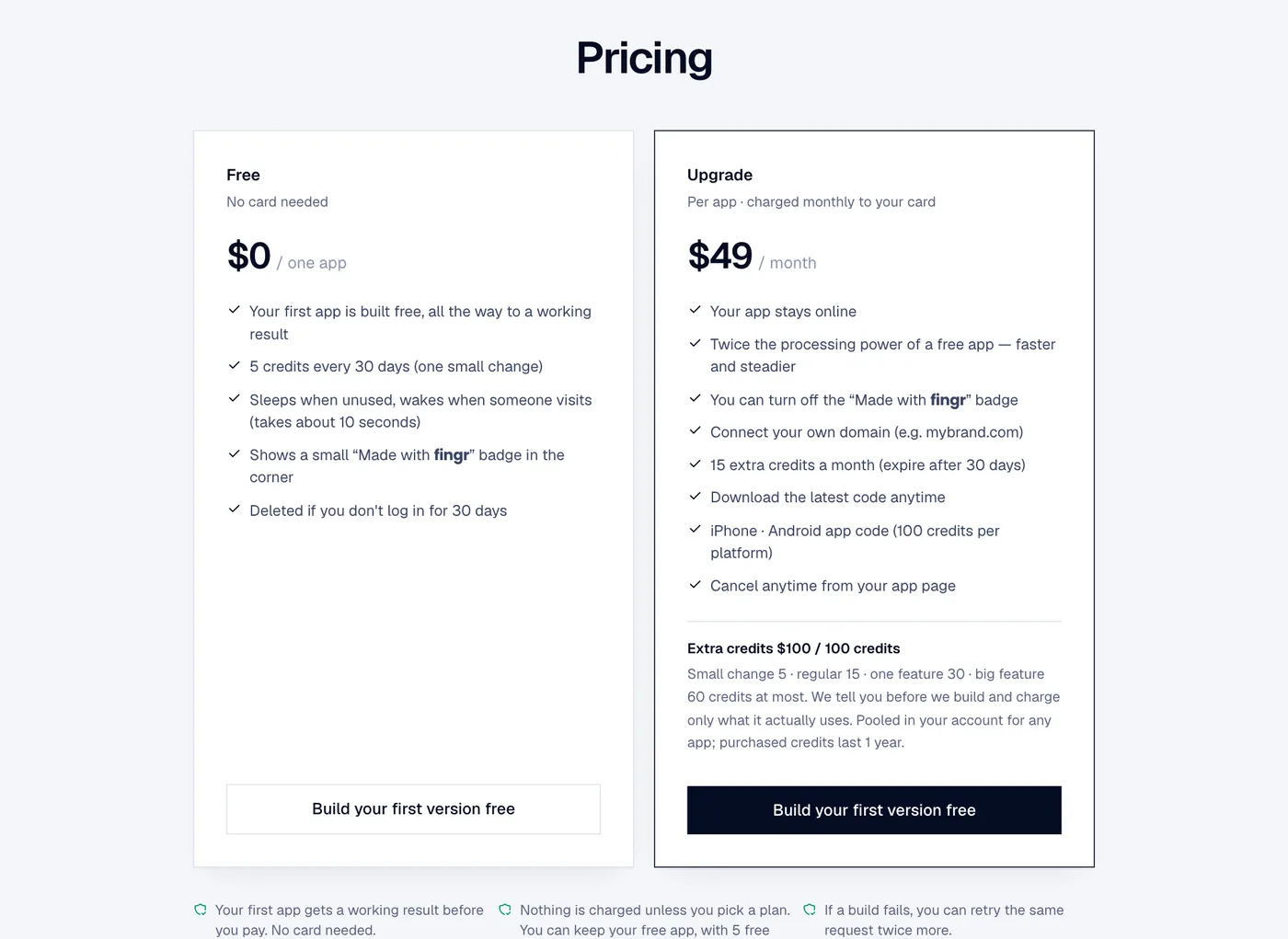
Here's how fingr charges:
- You can build one app with free credits. No card required.
- Upgrading an app costs $49/month. It stays online, can use your own domain, and hosting plus the database are included.
- Changes use credits ($100 for 100). A small fix is at most 5 credits and a new feature at most 30. You see the maximum before you approve, only the actual cost is deducted, and failed builds are refunded.
How long it takes
Agencies can take weeks just to find, quote, and sign. Design, development, and testing are commonly measured in months. Every "that's not what I pictured" moment pushes the timeline further.
No-code takes days if you already know the tool, weeks if you're learning. You are the builder, so the hours are yours.
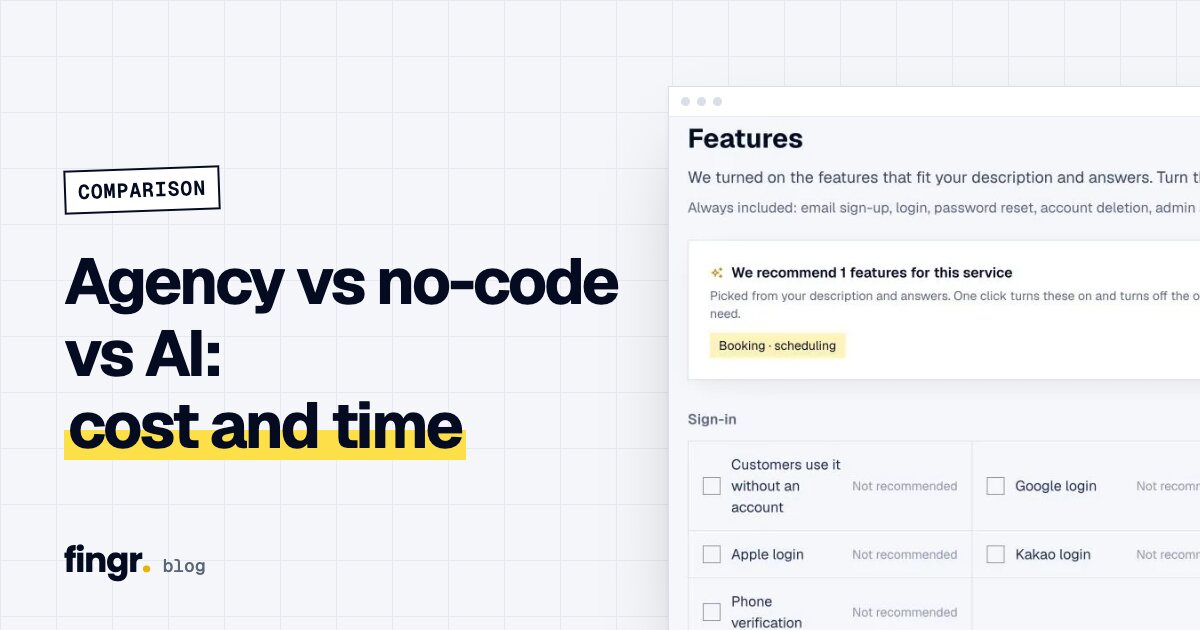
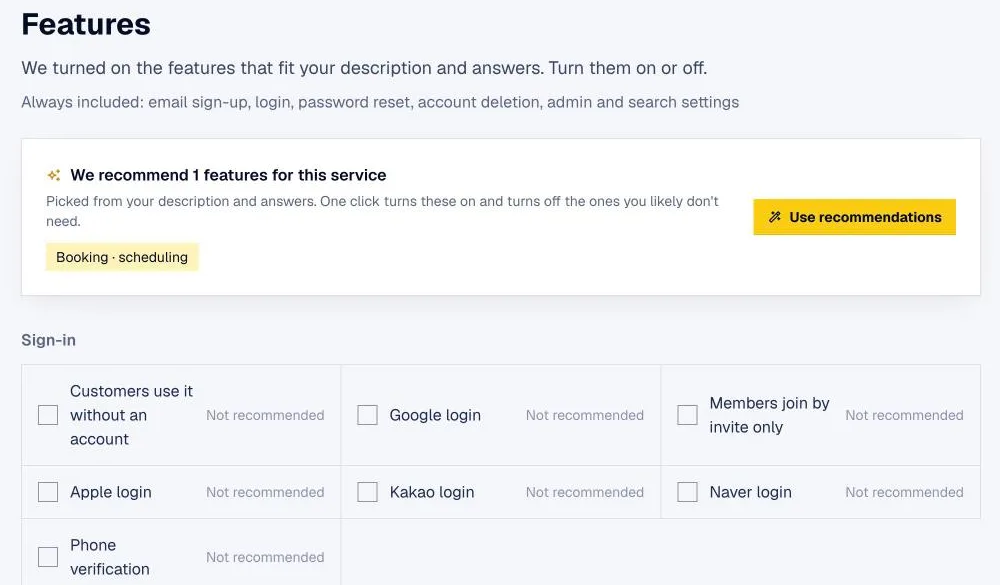
AI app builders show screens in seconds to minutes. With fingr, you answer questions, pick features, and adjust the design, and the real app usually takes a few minutes to build after that. Having a live, working app at a real URL within a day is the biggest difference.
What you end up with
| Agency | No-code | AI app builder (fingr) | |
|---|---|---|---|
| Upfront cost | Highest | Low (monthly plan) | One app on free credits |
| Time to first result | Months | Days to weeks | Usually within a day |
| Who builds it | The agency | You | AI, from your written requests |
| Flexibility | Highest | Whatever the tool allows | What you describe; fingr picks the tech |
| Small changes | Extra quote, wait time | Do it yourself | Describe it, pay in credits |
| Hosting and ops | Separate contract | Handled by the tool | Included |
| Code ownership | Depends on contract | Usually locked to the tool | You own it; download on a paid app |
| Very large scale | Best fit | Limited | Great for starting; scale needs a dev team |
How easy it is to change things matters more than you think
Launch day is short. Everything after it is long. Once customers use the app, requests pile up: "Can bookings be in 30-minute slots?" "Can we add coupon codes?"
- Agency: each change goes through contact, quote, schedule, delivery. Without a maintenance retainer, it's slower still.
- No-code: you can change it right away, as long as you know the tool well.
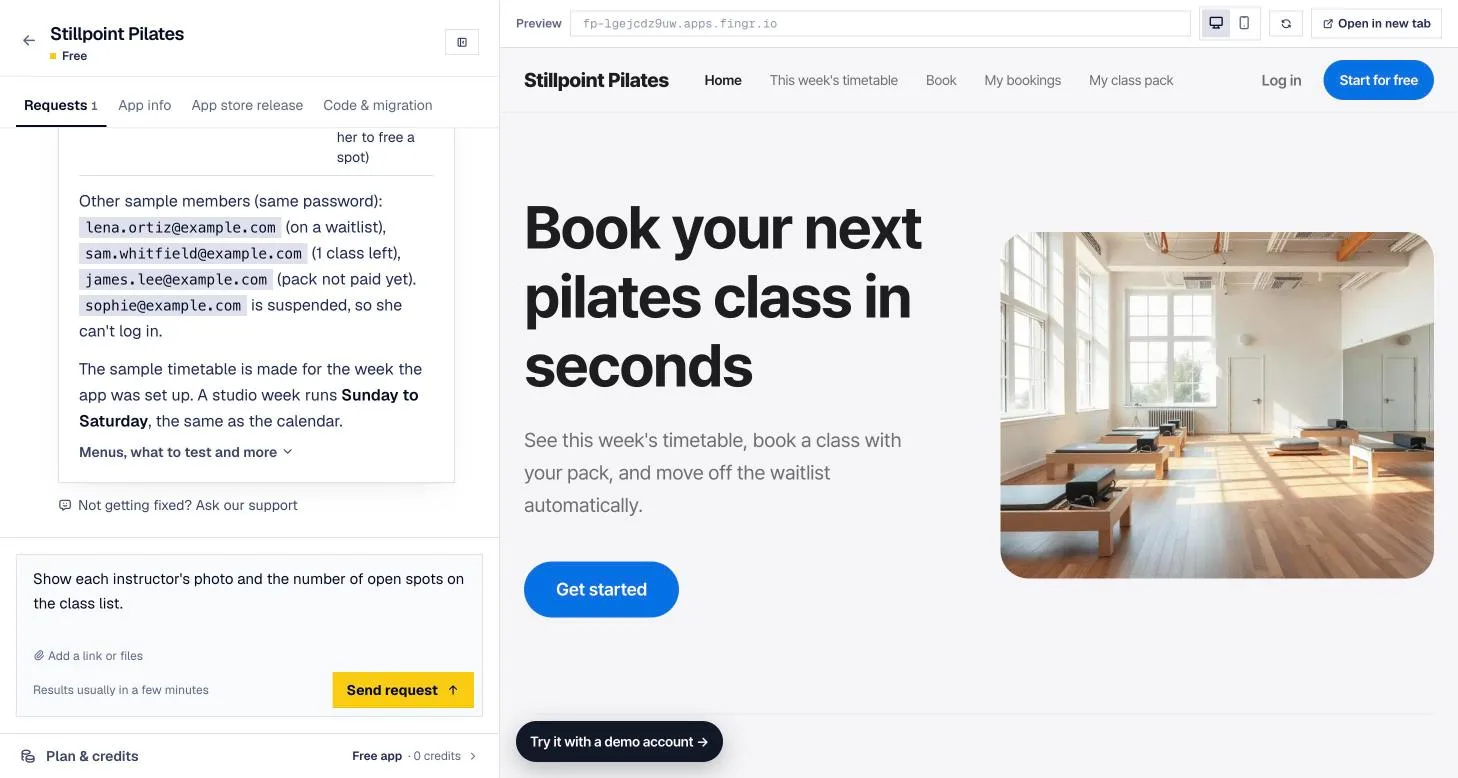
- fingr: describe the change in a sentence, the AI makes it, and you check it on the live app. If something errors, tap "Ask to fix it" and it's handled.
Ownership and switching later
Think ahead about whether you can take your app with you.
Most no-code apps only run inside that platform. If prices go up or the product changes direction, moving is painful.
With fingr, you own the code. Paid apps can download the latest code anytime, and for 200 credits fingr will move the app to your own DigitalOcean (cloud hosting) account. That makes "validate with fingr, then hand the code to an agency to scale" a realistic plan.
So which should you pick?
An agency fits when
- The business is proven and you're building for a very large user base.
- You need deep integration with internal systems or specialized hardware.
- You need a contract where someone is accountable for the build.
No-code fits when
- You enjoy building things yourself and have time to learn.
- You're already invested in a no-code tool's templates and plugins.
fingr fits when
- You need a booking, ordering, or membership app your business can use now.
- You want to validate the idea before spending real money.
- You want help with planning and market research before anything is built.
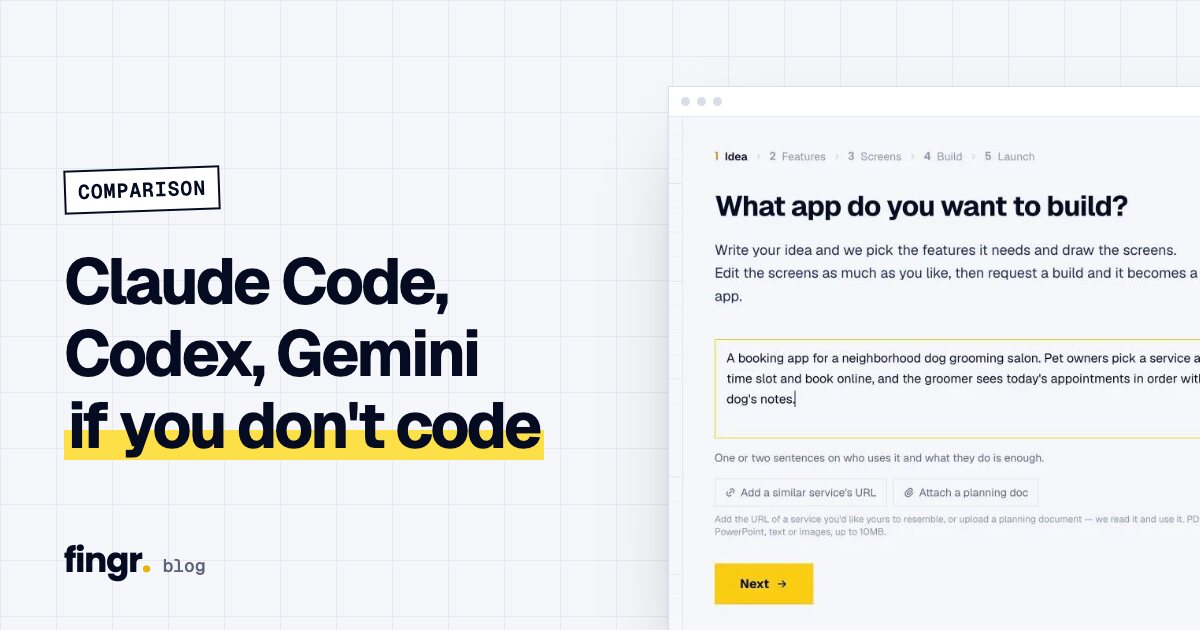
- You'd rather describe what you want than learn to build it.
fingr isn't the right call if you must choose your own tech stack, edit code line by line, or launch at very large scale from day one. In those cases, an agency or engineering team is the better path.
Whichever route you take, the order matters. Plan and research first, confirm the screens, then build. That's how you stop money from leaking into rework. We cover that process in how to build a web service efficiently. For a comparison of AI tools specifically, see the 2026 AI app builder comparison.
Bottom line
An agency is "spend money and time, get exactly what you spec." No-code is "spend your own time and build it yourself." An AI app builder is "describe it and see it fast." If the idea isn't proven yet, the safest move is whatever gets real customer feedback for the least money.
Start with a sentence or two on fingr. You'll go through planning and design to a working app, and you can build one with free credits. Build your first app with fingr
FAQ
How much does it cost to hire an agency to build an app?
It varies widely with scope and who you hire. Simple web apps are often quoted in the low tens of thousands of dollars, and apps with accounts, payments, and an admin dashboard frequently go well beyond that. Get quotes from several shops using the same feature list.
What's the difference between no-code and an AI app builder?
With no-code tools you assemble the app yourself from blocks and settings. With an AI app builder you describe what you want in plain words and the AI builds the screens and features. No-code takes time to learn; AI builders reward clear descriptions.
Can I run a real business on an app made with an AI builder?
It depends on the tool. fingr includes sign-up, data storage, an admin dashboard, and hosting, and it automatically checks security issues like whether people can see each other's records before handing the app over. Very large services or complex internal integrations still need an engineering team.
Can I move to an agency later?
Yes. You own the code of apps built with fingr, and on a paid app you can download the latest version. Validate with fingr first, then hand the code to an agency if you need to scale.
Start your app with one sentence
Answer a few questions, see the screens first, then turn them into a real app. You can build one app with free credits.